
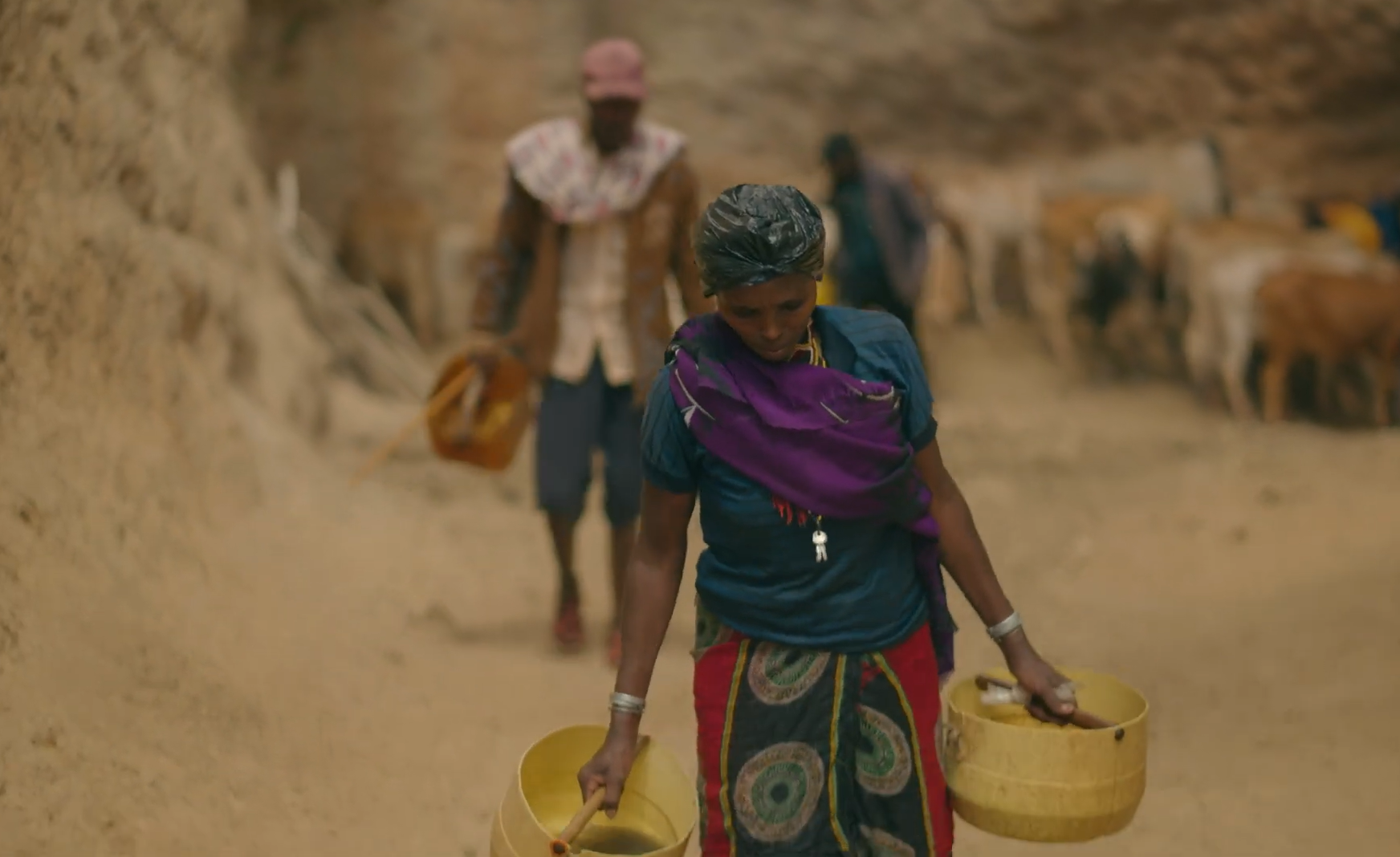
In the Borena zone, in southern Ethiopia’s Oromia Region, Italian Cooperation promotes an innovative approach to strengthening the resilience of agro-pastoral communities: acting before crises occur.
Through cooperation initiatives and humanitarian interventions, AICS supports actions aimed at preventing climate shocks and protecting livelihoods, in a context where climate variability represents a growing threat to food security and household economic stability.
Borena is one of the areas most affected by recurrent droughts in the Horn of Africa. In recent years, the increasing frequency and intensity of dry seasons have progressively reduced access to water and pasture, undermining traditional pastoral systems on which local communities depend for their survival. The loss of livestock—often the main source of income and food security—represents one of the most severe consequences of these shocks, with cascading effects on nutrition, access to services, and coping strategies.
In this context, responding to emergencies is no longer sufficient: they must be anticipated.
In recent years, Italian Cooperation has supported projects that have helped introduce and consolidate anticipatory approaches to climate risk management. Among these, the HORA BULA project (which in the Oromo language means “long life and prosperity”) represented a particularly significant experience. Implemented by CESVI in partnership with the NGO Ayuda en Acción, the project is now concluded, but it continues to generate tangible effects on the ground, strengthening capacities, tools, and practices that remain available to local communities and institutions.
This approach is based on the use of early warning systems and climate risk analysis, which make it possible to identify signs of environmental stress and trigger timely interventions. In this way, it is possible to reduce the impact of crises, protect livelihoods, and limit the adoption of negative coping strategies.
Activities implemented over the years have included direct support to agro-pastoral livelihoods, such as livestock distribution to help rebuild herds affected by drought, and multi-purpose cash assistance to address immediate needs in a flexible way while also supporting local markets.

